If you think of a vector as being a cousin to a line segment (it has a direction), you can think of a bivector as being a cousin to a plane segment (it has a sense).
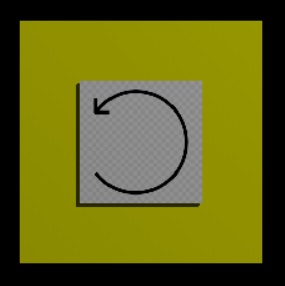
In the above example, the yellow plane segment is shown to have a rotation, and from our perspective, it is counterclockwise. Keep in mind that someone looking at it from the other side would see it as clockwise.
The magnitude of a bivector is its area.
The Exterior Product of two vectors is a bivector. The result has the shape of a parallelogram. In the illustration below we are adding together a blue vector and a yellow vector and you can see how it is possible to add another blue vector and another yellow vector to complete a parallelogram.

The line segments of the above vectors are put on graph paper so you can visually calculate the area encompassed by the parallelogram.

Hopefully after seeing the above as a rectangle of area 32 with two right triangles cut away, with area 6 from each right triangle, you’ll see the area of the parallelogram as being 20. The blue vector is (5,0) and the yellow vector is (3,4).
The calculation that builds a bivector is called the Wedge Product:


 Rob Sterling